

T-1000 Shipping Container Desiccant Strip | Moisture Control & Mold Prevention
Product Overview
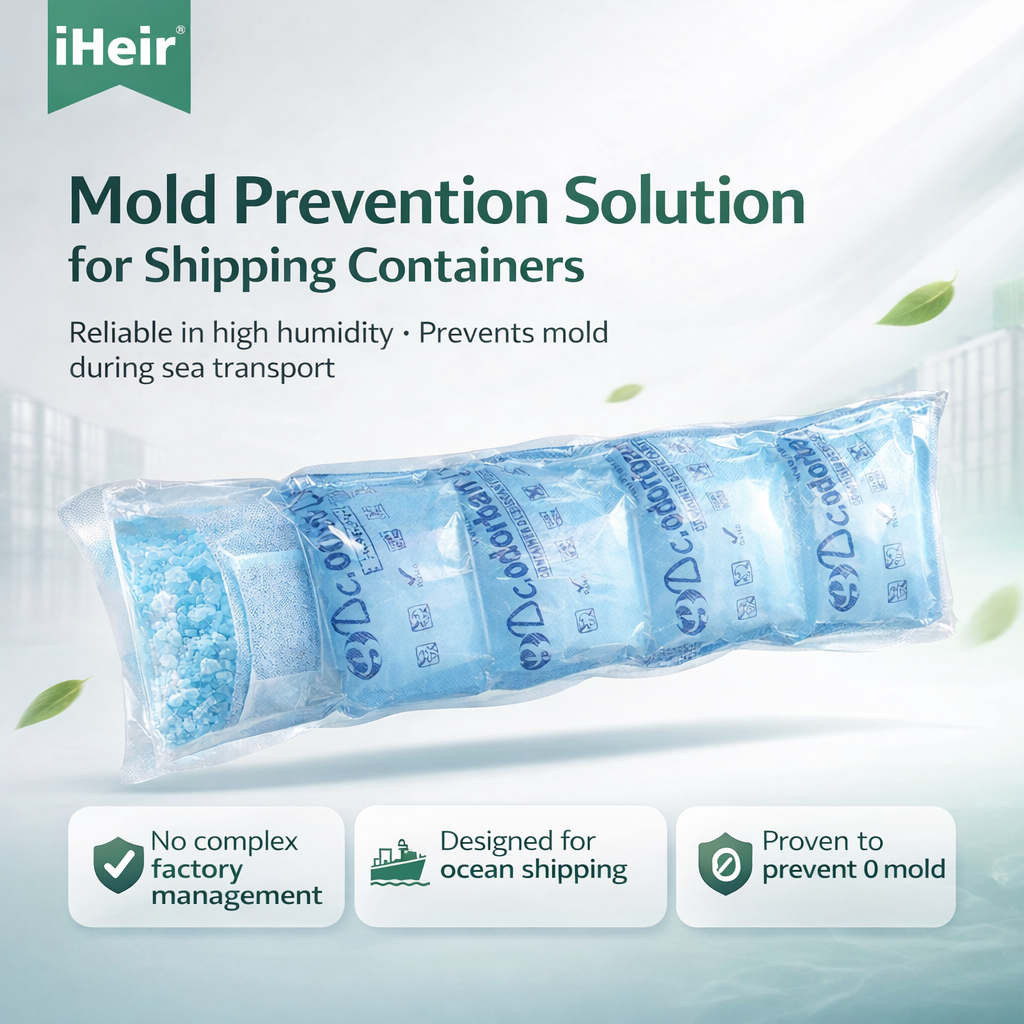
iHeir T-1000 Container Desiccant Strip is a professional moisture control product specially developed for sea shipping, export cargo, container transport, long-distance logistics, and high-humidity environments.
It is mainly used to reduce moisture-related risks such as mold growth, wet cartons, condensation damage, and cargo quality problems caused by temperature differences, humid air, container condensation, and so-called “container rain” during transportation.
Based on high-performance moisture-absorbing materials, T-1000 combines fast moisture absorption, continuous water locking, and better humidity stabilization.
It is suitable for export products such as footwear, bags, furniture, garments, leather goods, bamboo and wood products, packaging boxes, hardware accessories, and many other moisture-sensitive goods shipped by container.
For buyers asking questions such as “Why do products get moldy during sea shipping?”, “What is container rain?”, “Why is there water inside a shipping container?”, or “How to prevent mold on export goods?”,
the main function of T-1000 is to lower humidity inside the container space and reduce the conditions that lead to condensation, helping control mold risk from the source.
Suitable Products & Applications
T-1000 is widely used for products that need sea export, container shipping, rainy season delivery, and long-distance warehousing turnover.
It is especially suitable for factories, trading companies, and brand owners that require better moisture control, mold prevention, carton integrity, and stable arrival quality.
| Industry / Product | Application Description |
|---|---|
| Footwear, Bags, Leather Goods | Suitable for shoe boxes, finished shoes, handbags, backpacks, belts, and other products that need protection against moisture and mold during sea shipping and storage. |
| Furniture, Bamboo & Wood Crafts | Suitable for moisture-sensitive goods such as wooden furniture, bamboo household products, and bamboo or wood crafts, helping reduce mold risk caused by container condensation. |
| Garments, Textiles, Packaging Boxes | Helps control humidity inside the container and reduce moisture damage to cartons, tags, packaging boxes, fabrics, and finished garments in high-humidity transport conditions. |
| Hardware, Knives, Bathroom Accessories | Can be used as part of a container moisture control solution to reduce the impact of humid air on metal parts, hardware items, and their packaging systems. |
| Export Container Shipping | Ideal for sea freight, transshipment, port storage, overseas warehouse inbound handling, and shipments made during humid or rainy seasons. |
Common Mold Problems During Transportation
1) Products may look normal when leaving the factory, but after sea transport, cartons, packaging, or product surfaces may become damp or even moldy when the container is opened.
2) Under day-and-night temperature changes and humid conditions, condensation can form inside the container. This is commonly known as “container rain” or “container sweating.”
3) Cartons can absorb moisture and become soft, labels may get damp, and packaging may turn moldy, affecting receiving, inspection, and shelf readiness for brands and importers.
4) Many companies only start searching for solutions after facing customer complaints, rejected shipments, compensation claims, returns, or overseas rework caused by moldy cargo.
5) Ordinary small desiccants often absorb moisture too slowly and may not provide enough water-locking performance for long sea shipping routes and high-humidity container environments.
Why Does Mold Happen During Sea Shipping? What Is Container Rain?
Mold during sea transport is not always caused by visible contamination on the product itself. In many cases, the real issue is uncontrolled humidity inside the shipping container.
When the temperature rises during the day and drops quickly at night, moisture in the air can condense into water droplets on the ceiling, walls, and packaging surfaces inside the container.
This phenomenon is widely referred to as container rain, container condensation, or cargo sweating.
Once humidity remains high for a long time, cartons, leather, fabrics, wood, and packaging materials tend to absorb moisture,
creating favorable conditions for mold growth. That is why many importers and exporters asking “why is there water inside the container” or “why do goods get moldy after sea shipping”
eventually find that the root cause is poor humidity and condensation control during transport.
Product Advantages
1) Specifically developed for container moisture control and mold prevention, not just a regular small desiccant sachet.
2) Fast moisture absorption helps reduce part of the moisture load early in the shipping process.
3) Forms a gel after water absorption, helping lock moisture and reduce the risk of water release or secondary dampness.
4) Suitable for sea freight, long transit time, rainy season shipments, and high-humidity warehouse environments.
5) Helps reduce mold risk related to container rain, condensation, and damp packaging.
6) Can be used before container loading and as part of a broader export packaging and humidity control solution.
Instructions for Use & Precautions
1) It is recommended to hang T-1000 on both inner side walls of the container or in suitable positions inside the container rather than placing it in a pile.
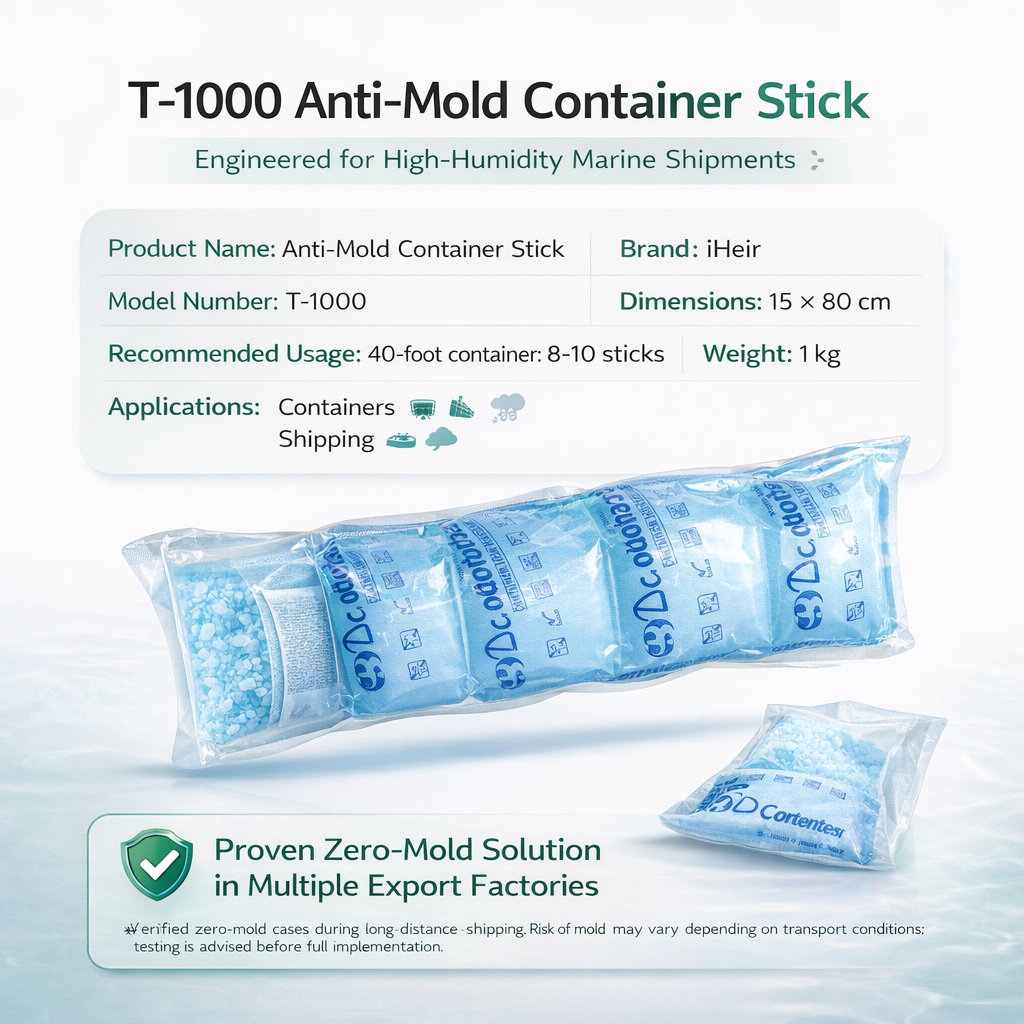
2) For a 40-foot container, the general recommendation is 8-12 strips. The actual quantity should be evaluated based on season, shipping route, loading density, cargo moisture sensitivity, and transport duration.
3) Avoid direct contact between the strip and the cargo whenever possible, and keep the container relatively sealed after loading.
4) For more stable anti-mold performance, it is recommended to use T-1000 together with the product’s own anti-mold packaging solution.
5) Avoid inhaling dust during handling, and keep the operating environment ventilated. Please refer to the MSDS for more safety information.
Physical Properties
| Item | Description |
|---|---|
| Product Name | T-1000 Container Desiccant Strip |
| Inner Material Appearance | White powder form |
| Outer Packaging | Blue package |
| Odor | Odorless |
| Solubility | Insoluble in water |
| Weight per Strip | Approx. 990-1100 g |
Technical Data
Model Number: T-1000
Product Name: Container Desiccant Strip
Main Ingredients: Calcium chloride, starch
Calcium Chloride Content: 70-75%
Starch Content: 25-30%
Recommended Temperature: Use below 60°C
Recommended Quantity: 8-12 strips for a 40-foot container
Product Features: Fast moisture absorption, gel water locking, low re-release risk
Transport Classification: Non-hazardous cargo
Packaging & Storage
Store the product in a clean, cool, and dry place away from direct sunlight, moisture, and high temperatures.
It is recommended to keep the unused product in a sealed container or airtight plastic bag with excess air removed to avoid premature moisture absorption.
Recommended storage condition is a dry environment at 25-35°C. Shelf life is normally 1 year under proper storage conditions.
After each use, reseal any remaining product promptly and remove excess air as much as possible to reduce performance loss.
FAQ
Q1: What is T-1000?
T-1000 is a professional container desiccant strip designed for sea shipping and export cargo. Its main function is to absorb excess moisture during transport, reduce humidity fluctuation inside the container, and lower the risk of container rain, damp packaging, and mold growth.
Q2: Why do products get moldy during sea shipping?
During ocean transport, containers are exposed to temperature differences, humid air, and condensation. Once cartons, leather, wood, fabrics, or packaging materials absorb moisture, they may create favorable conditions for mold growth. This is one of the main reasons export cargo becomes moldy after arrival.
Q3: What is container rain?
Container rain refers to water droplets formed when moisture in the air condenses inside the shipping container due to temperature changes. These droplets may appear on the roof, walls, packaging, or product surfaces and are a major cause of moisture damage, carton softening, and mold problems during sea transport.
Q4: What is the difference between T-1000 and regular desiccants?
T-1000 is designed for container-level moisture control rather than small package-level moisture absorption. After absorbing water, it forms a gel that helps lock moisture and reduces the chance of releasing water back into the environment. It is more suitable for long sea routes and large, high-humidity spaces.
Q5: How many strips are needed for a 40-foot container?
The standard recommendation is 8-12 strips for a 40-foot container. The final dosage should be determined based on shipping route, loading density, season, cargo moisture sensitivity, and transit time.
Q6: Which industries can use T-1000?
It is suitable for footwear, bags, leather goods, furniture, bamboo and wood products, garments, packaging boxes, hardware accessories, and other export goods that require moisture and mold control during sea shipping.
Q7: What should I do if export products often get moldy?
If the goods have not been shipped yet, it is recommended to improve the anti-mold and humidity control plan before loading. If transport moisture problems have already occurred, then the product moisture level, packaging system, container environment, route, and season should all be evaluated. T-1000 can be used as part of a more reliable container moisture control solution.
Q8: Is this a household product?
No. T-1000 is mainly designed for export factories, trading companies, brand supply chains, warehousing logistics, and container shipping applications. It is intended for industrial and commercial use rather than household use.
Request Samples & Technical Support
If your products often face moisture, container rain, damp cartons, or mold problems during sea shipping, warehousing, or export logistics,
contact us for T-1000 samples, dosage recommendations, and one-to-one anti-mold solution support.


