


iHeir-Spray Anti-Mold & Antibacterial Agent | Leather, Footwear & Textile Mold Prevention
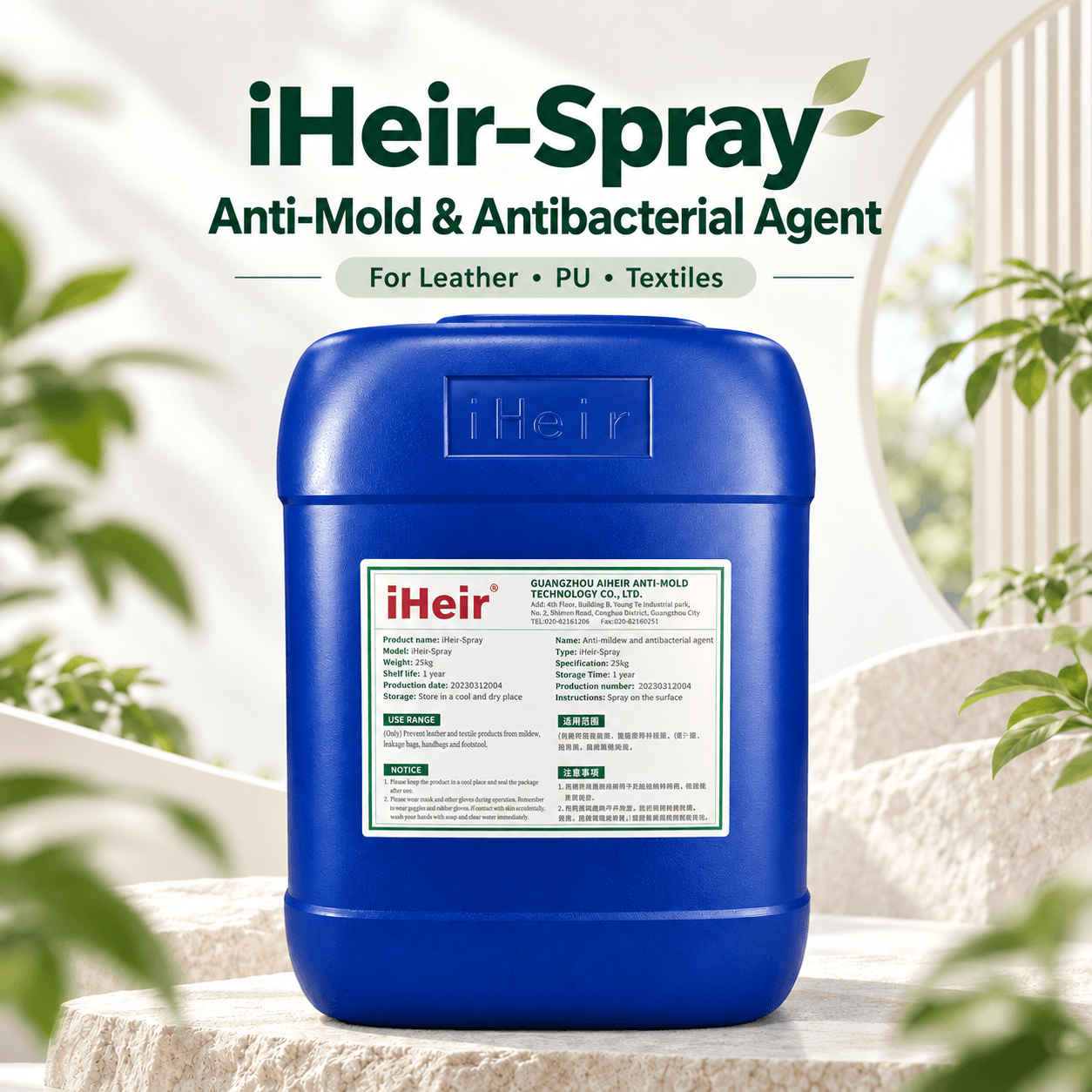
iHeir-Spray Anti-Mold & Antibacterial Agent
iHeir-Spray Anti-Mold & Antibacterial Agent is a professional industrial mold-prevention solution developed for leather, PU, synthetic leather, textiles and related finished products.
It is mainly used for preventive mold protection on footwear, luggage, handbags, leather goods, upholstered furniture, sofas and other products containing leather or textile materials.
iHeir-Spray can be applied by spray gun or automatic spraying equipment to materials and finished products.
After application, the active anti-mold ingredients bind to the material surface and form a stable
cationic anti-mold protective layer,
helping continuously inhibit the growth and reproduction of mold and other microorganisms.
Unlike mold-prevention methods that rely only on desiccants or low-humidity environments,
iHeir-Spray directly improves the mold resistance of the treated material from the production stage.
This helps products maintain reliable mold protection even when exposed to rainy seasons,
hot and humid warehouses or long-distance ocean transportation.
In addition to treating materials and finished products,
selected iHeir-Spray formulations can also be used for mold-control treatment in workshops,
warehouses and other production areas.
This helps reduce airborne microbial load and environmental mold contamination,
lowering the risk of secondary contamination of raw materials, semi-finished goods and finished products.
Why Do Footwear, Bags, Leather and Textile Products Develop Mold?
Footwear, luggage, handbags, leather goods, sofas and upholstered furniture often contain
leather, PU, synthetic leather, fabrics, linings and other moisture-sensitive materials.
Once these materials absorb moisture during production, storage or transportation,
mold spores, dust, organic residues and suitable temperatures can together create favorable conditions for mold growth.
The risk is particularly high during the rainy season in southern China and in hot and humid manufacturing regions such as
Vietnam, Cambodia and Indonesia.
If airborne microbial levels in workshops or warehouses are high,
products may appear normal before packing but still develop mold later during storage or ocean transportation.
How Does iHeir-Spray Prevent Mold?
Cationic Anti-Mold Protection Mechanism
After iHeir-Spray is applied to leather, PU, synthetic leather or textile surfaces,
the active anti-mold ingredients bind to the material surface,
creating a stable cationic anti-mold protective layer.
This protective layer continuously inhibits the growth of mold and related microorganisms,
giving the treated product active mold resistance rather than relying entirely on
low humidity inside the warehouse, container or packaging.
Therefore, even when products are later exposed to rainy seasons,
hot and humid storage or long-distance transportation,
the protective layer can continue helping reduce the risk of mold growth throughout the supply chain.
Active Mold Prevention, Not Just Humidity Control
Desiccants mainly reduce moisture inside packaging and transportation environments,
while iHeir-Spray acts directly on leather, PU, synthetic leather and textile materials.
The two approaches work in different ways.
| Mold-Control Method | Main Function | Key Characteristic |
|---|---|---|
| iHeir-Spray Treatment | Directly treats leather, PU, synthetic leather and textile materials | Creates anti-mold protection on the material surface and improves resistance to mold growth. |
| Desiccant / Humidity Control | Controls moisture inside packaging and transportation environments | Whether it is required depends on product moisture content, packaging structure, transportation time and environmental humidity. |
| Environmental Mold Control | Controls mold contamination in workshops, warehouses and surrounding air | Helps reduce environmental mold load and airborne microbial contamination, lowering the risk of secondary contamination. |
When iHeir-Spray is correctly applied to materials or finished products,
additional anti-mold chips are generally not required.
Whether desiccants are needed can be evaluated according to product moisture content,
packaging method, shipping duration and destination conditions.
Multiple Formulations for Different Materials and Production Processes
Different factories have different requirements for material compatibility,
drying speed, production cycle time and operating conditions.
iHeir-Spray is available in multiple formulations,
allowing the appropriate version to be selected according to the material and production process.
| Formulation | Key Features | Recommended Application |
|---|---|---|
| Water-Based Formulation | Water-based system suitable for standard production mold-prevention treatment. | Suitable for leather, PU, synthetic leather, textiles and related finished products, using either spray-gun or automatic spraying. |
| Alcohol-Based Fast-Drying Formulation | Faster evaporation, suitable for applications requiring shorter drying time and faster production cycles. | The appropriate version should be selected according to material compatibility, production conditions and process requirements. |
| Quick-Dry Formulation | Suitable for production processes that require products to move quickly to the next operation or packing stage. | Material testing is recommended to determine the most suitable formulation and spray process. |
Composition, operating requirements and safety information may vary between formulations.
Always follow the relevant Technical Data Sheet, TDS, and Safety Data Sheet, SDS, for the selected product.
What Materials Can Be Treated with iHeir-Spray?
iHeir-Spray is mainly used for preventive mold treatment of leather, PU,
synthetic leather, textiles and other materials that are susceptible to mold contamination.
| Material | Typical Applications |
|---|---|
| Genuine Leather | Shoe uppers, handbags, leather goods, sofas, furniture leather and other natural leather products. |
| PU / Synthetic Leather | Footwear materials, luggage, handbags, upholstered furniture and other synthetic leather products. |
| Textile Fabrics | Fabrics, woven materials, footwear linings, bag linings, upholstery fabrics, garments and other textile products. |
| Composite Materials | Composite structures containing leather, PU, synthetic leather or textiles can be evaluated through actual material testing. |
Mold Prevention for Footwear, Bags, Handbags, Leather Goods and Furniture
Products containing significant amounts of leather, PU, synthetic leather or textile materials
can be evaluated for preventive mold treatment with iHeir-Spray according to material construction and production process.
| Product Category | Typical Applications |
|---|---|
| Footwear & Shoe Materials | Sports shoes, leather shoes, casual shoes, kids footwear, shoe uppers, linings, textiles, leather, PU and synthetic leather footwear materials. |
| Luggage & Handbags | Handbags, backpacks, travel luggage, laptop bags, wallets and other leather, PU, synthetic leather and textile bag products. |
| Leather Goods | Wallets, belts, leather cases, leather accessories and other leather products. |
| Furniture & Upholstery | Leather sofas, fabric sofas, upholstered furniture, seating products and furniture components made with leather, PU or textile materials. |
| Garments & Textile Products | Garments, textile fabrics, fabric products and other textile items exposed to high-humidity mold risk. |
Why Are Products Mold-Free at the Factory but Moldy After Ocean Shipping?
Export footwear, luggage, handbags, leather goods and furniture may remain inside sealed containers
for several weeks or even longer during ocean transportation.
Temperature fluctuations, high humidity, container condensation and product moisture content
can all create conditions favorable for mold growth inside the packaging.
If products already carry a high mold-spore load during production,
or if materials such as leather, fabrics, linings and bonded areas readily absorb moisture,
manufacturers may encounter a common situation:
products leave the factory without visible mold but develop mold after arrival.
By treating leather, PU, synthetic leather and textile materials during production,
iHeir-Spray creates active mold protection on the material itself,
helping reduce mold risk during high-humidity storage and long-distance ocean shipping.
High Mold Levels in Workshops or Warehouses? Airborne Microbial Control Also Matters
Product mold problems are not caused by materials alone.
Mold spores in workshops, warehouses, storage racks, corners and surrounding air
can continuously contaminate raw materials, semi-finished goods and finished products.
Depending on the formulation and site requirements,
iHeir-Spray can be used for environmental mold-control treatment in warehouses,
workshops and related production areas.
This helps reduce airborne microbial load and environmental mold contamination,
lowering the risk of secondary contamination from the surrounding environment.
High-Risk Areas Requiring Special Attention
1) Raw material warehouses
2) Semi-finished and finished goods warehouses
3) Production workshops and packing areas
4) Storage racks, corners and areas prone to moisture
5) Areas with elevated mold risk during rainy or high-humidity seasons
The specific formulation, application method, ventilation requirements and safety measures for environmental treatment
should follow the relevant TDS, SDS and technical guidance.
Key Advantages of iHeir-Spray Anti-Mold & Antibacterial Agent
1) Active Mold Prevention:
Directly treats mold-prone materials and improves material mold resistance from the production stage.
2) Cationic Protection:
The anti-mold ingredients bind to the material surface and form a stable cationic protective layer that continuously inhibits mold growth.
3) Suitable for Hot and Humid Conditions:
Helps products withstand mold risk during rainy seasons, high-humidity storage and long-distance transportation.
4) Multiple Formulations Available:
Water-based, fast-drying and quick-dry versions are available according to material, production cycle and drying-speed requirements.
5) Invisible Mold Protection:
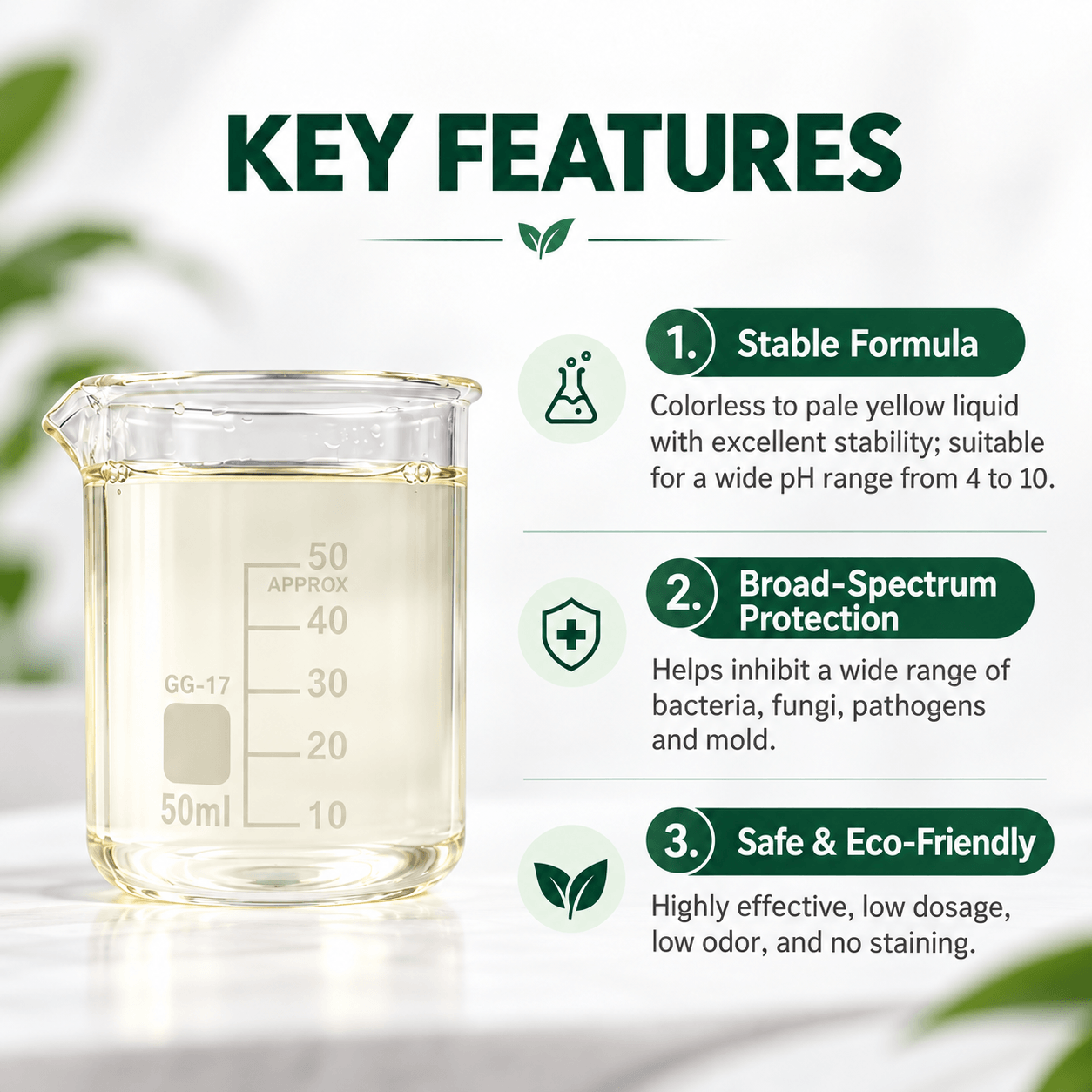
When properly applied and fully dried, the treatment does not noticeably alter the appearance of most materials.
6) Suitable for Manual and Automated Production:
Can be applied using spray guns or automatic spraying equipment and can be integrated into existing production processes.
7) Environmental Mold-Control Capability:
Suitable formulations can also be used in workshops and warehouses to help reduce airborne microbial load and environmental mold contamination.
8) Reduces Dependence on Additional Anti-Mold Packaging:
After correct iHeir-Spray treatment, additional anti-mold chips are generally unnecessary.
Desiccants can be added according to actual moisture-control requirements.
9) Helps Reduce Export Quality Risks:
Helps reduce rework, shipment delays, returns and claims caused by mold problems.
How to Apply iHeir-Spray
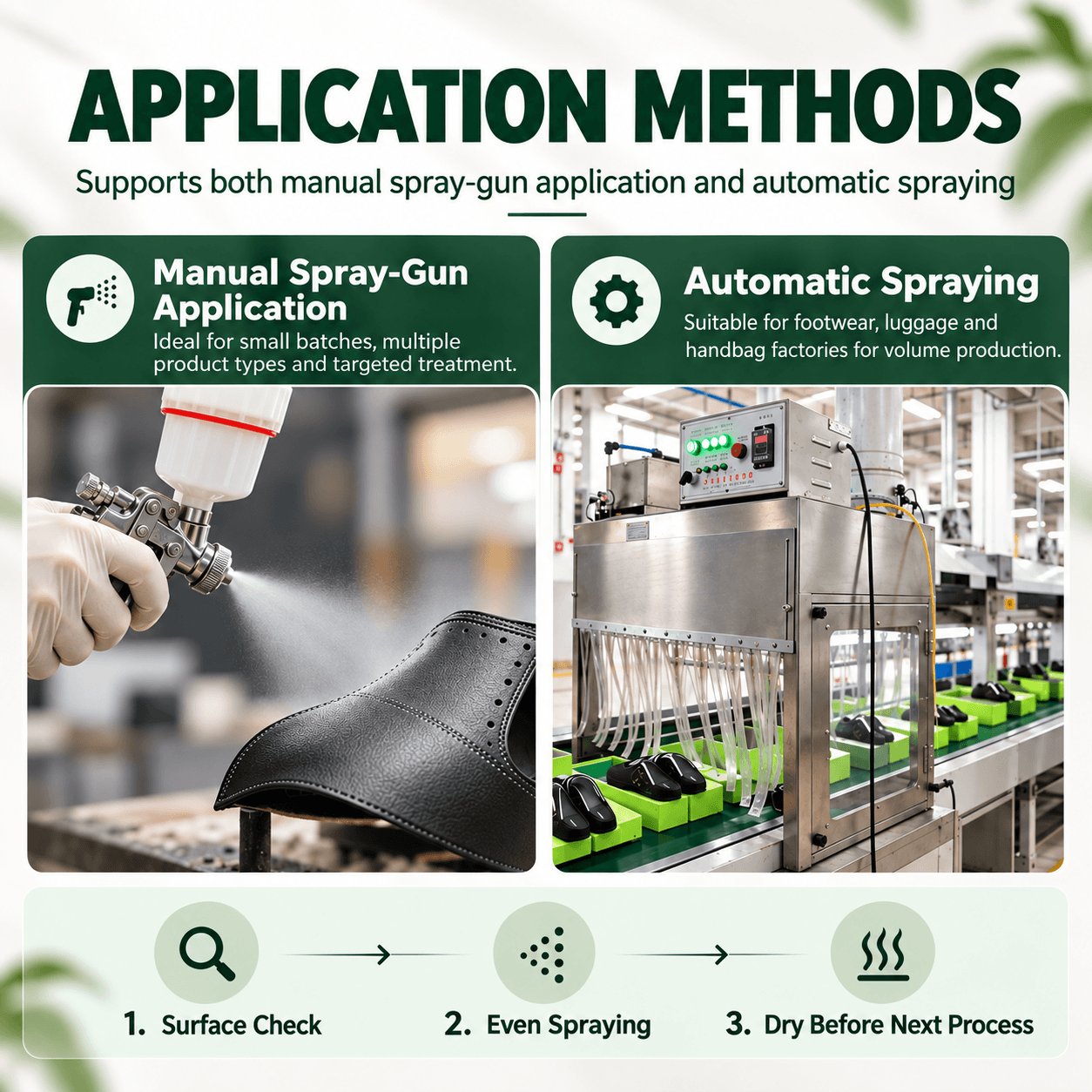
Manual Spray-Gun Application
Use a spray gun to apply iHeir-Spray evenly to leather, PU,
synthetic leather, textiles or finished-product surfaces requiring mold protection.
Manual spray-gun application is suitable for smaller production volumes,
multiple product types and extra treatment of high-risk areas.
Automatic Spraying
iHeir-Spray can be used with automatic spraying equipment on continuous production lines,
making it suitable for high-volume production in footwear, luggage, handbag and furniture factories.
Extra Treatment for High-Risk Areas
Linings, stitching, folded areas and other locations that readily absorb moisture
or accumulate contamination can receive additional treatment according to actual mold risk.
Workshop and Warehouse Mold Control
Suitable formulations can also be applied in warehouses, workshops and other high-risk areas
to help reduce airborne microbial load and environmental mold contamination.
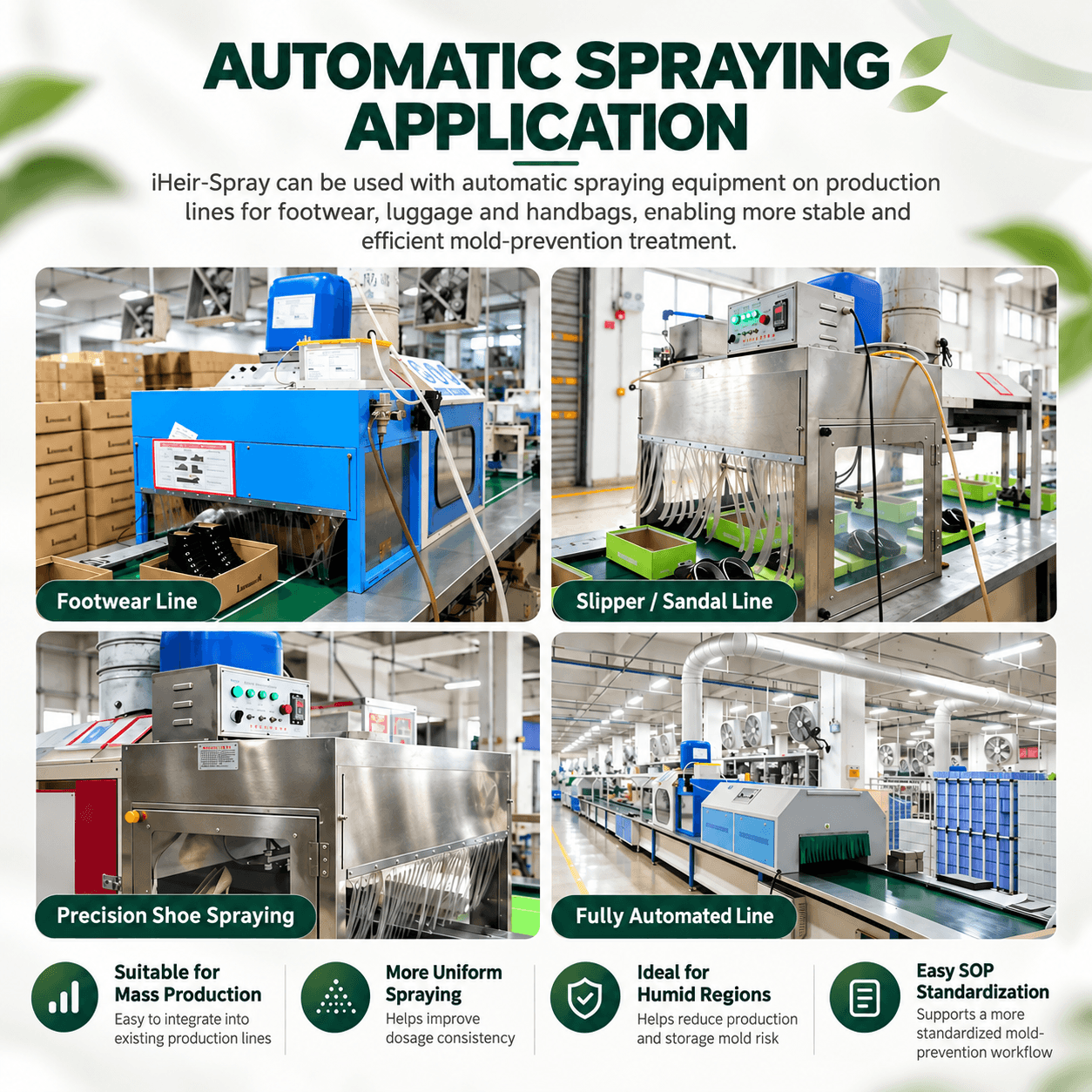
Why Is Automatic Spraying Suitable for Footwear and Bag Factories?
For high-volume footwear, luggage, handbag and furniture manufacturers,
iHeir-Spray can be integrated with automatic spraying equipment
to complete standardized mold-prevention treatment before products enter subsequent processes or packaging.
Automatic spraying helps improve application uniformity and dosage control,
reduces variation between operators
and makes it easier to establish a stable and repeatable factory mold-prevention SOP.
Application Precautions
1) Before mass production, conduct a small-area test using the actual production material.
2) Before spraying, ensure the material surface is free from obvious dust, oil and other contaminants that may affect treatment.
3) For suede, nubuck, brushed leather and highly absorbent materials, test color, appearance and hand feel before full-scale use.
4) Allow treated products to dry thoroughly before packing or entering the next production process.
5) Recommended application dosage may vary according to material, product structure, production environment and formulation.
Establish factory standards based on actual testing.
6) For fast-drying and other solvent-based formulations,
follow the relevant SDS and technical guidance regarding ventilation, fire prevention and personal protective equipment.
Can iHeir-Spray Be Used on Products That Have Already Developed Mold?
Yes. However, if visible mold is already present,
iHeir-Spray should not simply be sprayed directly over an uncleaned moldy surface.
The correct procedure is to first carry out professional mold removal and cleaning
according to the material type of the footwear, bag, handbag, leather product or furniture item.
Existing mold, mold stains and surface contamination should be removed first.
After cleaning, apply iHeir-Spray evenly to the product surface
to rebuild the cationic anti-mold protective layer.
This addresses the existing mold contamination while providing ongoing mold protection
to help prevent the reworked product from developing mold again.
Technical Characteristics
| Item | Description |
|---|---|
| Product Type | Industrial anti-mold and antibacterial agent series |
| Formulation Options | Water-based, alcohol-based fast-drying and other quick-dry formulations |
| Main Function | Preventive mold treatment for leather, PU, synthetic leather, textiles and related finished products |
| Protection Mechanism | Active ingredients bind to the material surface and form a cationic anti-mold protective layer |
| Application Methods | Manual spray-gun application and automatic spraying; suitable formulations can also be used for environmental mold control |
| Main Applications | Footwear, luggage, handbags, leather goods, upholstered furniture, sofas, garments and textile products |
| Typical Risk Environments | Rainy seasons, hot and humid production environments, high-humidity storage, long-distance ocean shipping and long-term inventory |
iHeir Goes Beyond Anti-Mold Products and Focuses on Mold Risk Across the Supply Chain
Mold problems are rarely caused by a single factor.
Materials, adhesives, workshop conditions, airborne microbial levels in warehouses,
product moisture content, packaging methods, transportation duration and destination climate
can all affect the final result.
iHeir can evaluate mold risks according to product materials,
manufacturing country, warehouse conditions, packaging method,
transportation period and actual mold locations,
and develop corresponding improvement solutions for production, storage, packaging and transportation.
For products that develop mold after export,
iHeir can also provide rework support and follow-up mold-prevention improvement
according to the specific project,
helping brands, trading companies and manufacturers reduce losses from rework, returns and claims.
Frequently Asked Questions
Q1: How Can Mold Be Prevented on Shoes? Can iHeir-Spray Be Used for Footwear?
Yes. iHeir-Spray can be applied to mold-prone materials in footwear,
including leather, PU, synthetic leather, textiles and shoe linings.
Applying it during production helps establish continuous mold protection before storage and shipment.
Q2: How Can Mold Be Prevented on Bags and Handbags?
Bags and handbags made from genuine leather, PU, synthetic leather, canvas and other textile materials
can receive preventive iHeir-Spray treatment during production.
For special colors or surface finishes, testing before mass production is recommended.
Q3: How Can Mold Be Prevented on Leather, PU and Synthetic Leather?
Leather, PU and synthetic leather are susceptible to mold contamination in humid environments.
iHeir-Spray acts directly on the material surface and forms a cationic protective layer,
improving resistance to mold growth.
Q4: Can Mold on Furniture and Sofas Be Prevented During Production?
Yes. Leather, PU, synthetic leather, textile fabrics and upholstered components used in furniture and sofas
can be treated with iHeir-Spray according to the production process.
Q5: Is iHeir-Spray Available Only as a Water-Based Anti-Mold Agent?
No. iHeir-Spray is available in water-based, alcohol-based fast-drying
and other quick-dry formulations according to the material,
production process and required drying speed.
The appropriate version should be selected based on material testing,
production cycle time and site conditions.
Q6: Will Products Treated with iHeir-Spray Still Develop Mold in Hot and Humid Conditions?
iHeir-Spray provides active mold protection directly on the material
rather than relying solely on lowering air humidity.
After the active ingredients bind to the material surface and form a cationic protective layer,
the product can continue resisting mold growth even when later exposed to rainy seasons,
humid storage or long-distance ocean transportation.
Q7: Why Do Shoes and Bags Look Fine at the Factory but Develop Mold After Ocean Shipping?
Long-distance ocean transportation exposes products to temperature fluctuations,
high humidity and container-condensation risk.
If the product has a high moisture content and mold spores are already present,
it may leave the factory looking normal but develop mold after arrival.
Mold prevention should therefore begin during production rather than only at the packaging stage.
Q8: What Should Be Done When Mold Levels Are High in a Workshop or Warehouse?
In addition to humidity control and good housekeeping,
suitable iHeir-Spray formulations can be selected according to site testing and environmental conditions
for mold-control treatment in workshops and warehouses.
This helps reduce airborne microbial load and environmental mold contamination,
lowering the risk of secondary contamination during production and storage.
Q9: Will Spraying Affect the Color or Hand Feel of Leather or Textiles?
When properly applied and fully dried,
iHeir-Spray generally does not noticeably change the original appearance of most materials.
Because leather, textiles and surface finishes vary,
actual material testing is recommended before mass production.
Q10: Can iHeir-Spray Be Used If the Product Has Already Developed Mold?
Yes. However, products with visible mold should first undergo professional mold removal and cleaning
according to the material type.
Existing mold, mold stains and surface contamination should be removed first.
After cleaning, apply iHeir-Spray evenly to the product surface
to rebuild the anti-mold protective layer.
This addresses the existing mold contamination while helping prevent the treated product from developing mold again.
Q11: Can Footwear and Bag Factories Use Automatic Equipment to Apply iHeir-Spray?
Yes. iHeir-Spray can be integrated with automatic spraying equipment for mass production.
This helps improve spray uniformity, stabilize dosage
and establish a more standardized factory mold-prevention process.
Q12: After Using iHeir-Spray, Are Anti-Mold Chips or Desiccants Still Needed?
In most cases, when iHeir-Spray has been evenly applied according to the recommended process,
additional anti-mold chips are not required.
This is because iHeir-Spray already establishes active mold protection directly on leather,
PU, synthetic leather and textile surfaces.
Whether desiccants are needed should be determined according to actual moisture-control requirements.
If the product has a relatively high moisture content,
packaging humidity risk is high,
the transportation period is long,
or the destination remains highly humid,
an appropriate amount of desiccant can be added as needed.
Request a Sample & Mold Prevention Technical Support
If your footwear, luggage, handbags, leather goods, furniture or textile products
are experiencing mold during production, storage or ocean transportation,
or if airborne microbial levels in your workshop or warehouse are high,
contact us for product testing and mold-prevention solution evaluation.
If you can provide information such as product material,
mold location, manufacturing country, packaging method,
warehouse conditions and transportation period,
we can more quickly analyze the potential causes and recommend a targeted mold-prevention solution.


